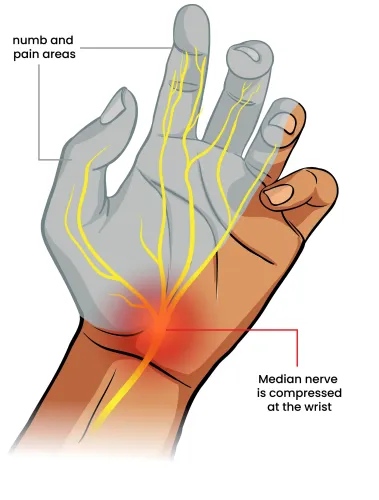
Nerves allow the hand to feel temperature, pressure, touch, and pain while also controlling important muscles. Damage to a nerve can therefore cause numbness, tingling, weakness, altered sensation, or difficulty performing precise movements.
The management of Nerve Injuries depends on where the nerve is damaged and whether it is compressed, stretched, partially injured, or completely divided.
Not All Nerve Injuries Are the Same
A nerve can temporarily stop functioning after compression or stretching without being physically divided. These injuries may have a different recovery pattern from a nerve that has been cut.
More substantial nerve damage can disrupt both sensation and muscle control. The level of injury also matters because nerve recovery must occur over a distance before function can return to the affected area.
Symptoms That Need Attention
Nerve involvement should be considered when an injury is followed by:
- Persistent numbness in one or more fingers
- Burning or electric-shock sensations
- Unusual sensitivity around a wound
- Weakness of specific finger movements
- Difficulty pinching or gripping
- Loss of coordination
- Muscle wasting over time
A deep cut to the wrist, palm, or fingers can damage nerves alongside tendons and blood vessels.
Observation or Surgical Treatment?
This is one of the key decisions in nerve injury management.
Some compression or stretch injuries can be monitored when the nerve remains structurally intact and there are signs that recovery is occurring.
A completely divided nerve is a different situation and may require repair or reconstruction. Timing, wound condition, associated injuries, the affected nerve, and the gap between nerve ends can influence the surgical approach.
How Is Recovery Assessed?
Clinical examinations performed over time can reveal changes in sensation and muscle function. Nerve conduction studies or electromyography may be useful in selected cases, although their timing and relevance depend on the injury.
Recovery after a significant nerve injury is often gradual rather than immediate. Rehabilitation may focus on maintaining joint mobility, protecting areas with reduced sensation, and retraining function as recovery progresses.
For people living and working in Bandra, hand sensation and fine motor control are essential across occupations ranging from technology and finance to manufacturing, healthcare, hospitality, art, and skilled trades.
Dr Nikita Shetty Orthopaedic Surgeon evaluates nerve-related hand symptoms in the context of the original injury, physical findings, functional loss, and appropriate investigations.
Persistent numbness after trauma should not simply be judged by pain levels. A wound may become less painful while a deeper nerve injury remains. Recognising that possibility can help patients obtain a more complete assessment of their hand function.
Keywords