
Wrist pain is a common complaint among office professionals, homemakers, drivers, healthcare workers, and people who perform repetitive hand movements every day. While many assume that persistent discomfort is simply due to overuse, some symptoms may point toward Carpal Tunnel Syndrome, a condition that requires a different approach to treatment than a routine wrist strain.
Understanding the differences between these two problems can help people seek appropriate medical care before symptoms become more severe.
A wrist strain usually occurs after overstretching or injuring the muscles, ligaments, or tendons around the wrist. It often develops following heavy lifting, sports activities, or sudden twisting movements. Pain is generally localized around the injured area and gradually improves with rest and activity modification.
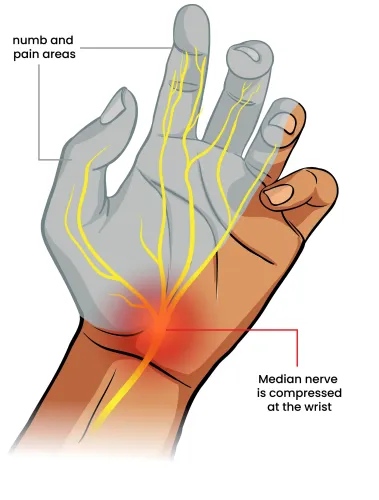
Carpal Tunnel Syndrome, on the other hand, develops when the median nerve becomes compressed as it passes through a narrow space in the wrist called the carpal tunnel. Instead of only causing pain, nerve compression produces a combination of sensory and functional symptoms.
A wrist strain commonly causes:
- Pain after physical activity
- Mild swelling
- Tenderness around the wrist
- Discomfort during movement
- Gradual improvement over several days
Carpal Tunnel Syndrome may present with:
- Numbness in the thumb, index, middle, and part of the ring finger
- Tingling sensations, especially at night
- Weak grip strength
- Difficulty holding small objects
- Frequent dropping of items
- Symptoms that worsen during repetitive hand use
Several risk factors increase the likelihood of Carpal Tunnel Syndrome, including prolonged computer use, diabetes, thyroid disorders, pregnancy, repetitive manual work, and inflammatory conditions affecting the wrist.
A specialist evaluation usually includes reviewing symptom patterns, performing specific clinical tests, and assessing muscle strength and sensation. In some cases, nerve conduction studies may be recommended to confirm the diagnosis and determine its severity.
Treatment depends on how advanced the condition is. Conservative options may include:
- Activity modification
- Wrist splints
- Anti-inflammatory medication when appropriate
- Hand therapy
- Ergonomic adjustments at work
- Steroid injections in selected patients
If nerve compression becomes severe or symptoms continue despite conservative treatment, surgery may be considered to relieve pressure on the nerve.
People working in Prabhadevi's corporate offices, technology sector, healthcare facilities, and service industries often perform repetitive hand movements throughout the day. Recognizing early symptoms can help prevent permanent nerve damage and prolonged hand weakness.
Dr Nikita Shetty Orthopaedic Surgeon evaluates patients with wrist pain by identifying whether symptoms arise from tendon injuries, ligament problems, fractures, arthritis, or nerve compression such as Carpal Tunnel Syndrome. Accurate diagnosis forms the basis for selecting the most appropriate treatment.
Persistent numbness should never be dismissed as simple fatigue. If tingling, weakness, or night-time discomfort continues, a specialist assessment can help identify the cause and guide timely management.
Keywords