Tendons connect muscles to bones and transmit the force needed to move the wrist and fingers. Because of this role, even a relatively small tendon injury can create a noticeable loss of function.
Tendon Injuries in the hand may result from cuts, sports injuries, falls, crush injuries, sudden force, or degenerative changes. The treatment approach differs considerably between a minor tendon problem and a complete rupture.
Partial Tendon Injury
With a partial injury, some tendon fibres remain intact. Movement may still be possible, although it can be painful or weak.
Depending on the tendon involved and the extent of damage, treatment may include protection, splinting, activity modification, and carefully planned rehabilitation. Some partial injuries still require surgical assessment, particularly if tendon gliding is impaired.
Complete Tendon Rupture
A complete rupture interrupts the tendon connection and can cause loss of a particular movement.
For example, a patient may suddenly be unable to bend or straighten a finger joint that previously moved normally. In an open injury, a cut may damage a tendon even when the skin wound initially appears manageable.
Complete tendon injuries frequently require specialised assessment because restoring continuity may be necessary to regain active movement.
Why Is Early Recognition Important?
Tendons can retract after being completely divided. Over time, scarring, stiffness, and changes in the surrounding tissues may make reconstruction more complex.
Seek prompt evaluation after an injury if you notice:
- Inability to bend or straighten a finger normally
- A deep cut across the palm, finger, or wrist
- Sudden loss of movement after forceful activity
- Abnormal finger posture
- Significant weakness
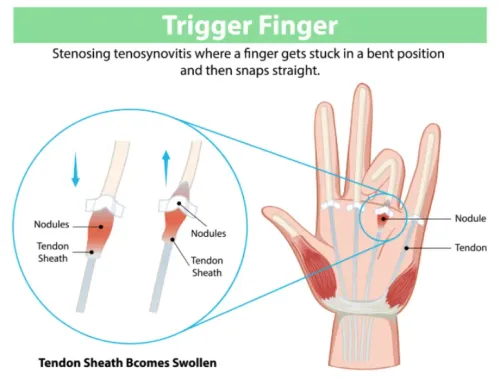
- Pain accompanied by a snapping sensation
Rehabilitation Matters After Repair
Surgical repair is only one part of tendon recovery. The repaired tendon needs protection while also being managed to reduce excessive stiffness and adhesions.
Rehabilitation protocols are therefore carefully balanced. Moving too aggressively can threaten a repair, while inadequate movement may contribute to stiffness.
Patients in Wadala often want to know when they can return to typing, driving, gym activities, sports, or manual work. The answer depends on the tendon involved, injury severity, repair stability, healing progress, and occupational demands.
Dr Nikita Shetty Orthopaedic Surgeon evaluates hand and wrist tendon injuries to determine the structures involved and whether non-operative care or surgical repair should be considered.
A useful rule after significant hand trauma is to look beyond the skin wound. If normal finger movement has changed after a cut or injury, deeper structures may also have been affected and deserve proper assessment.
Keywords