If one of your fingers suddenly locks while bending or makes a clicking sound before straightening, you may be experiencing Trigger Finger. Although the condition often starts with mild discomfort, it can gradually interfere with writing, gripping, cooking, typing, or carrying everyday objects if left untreated.
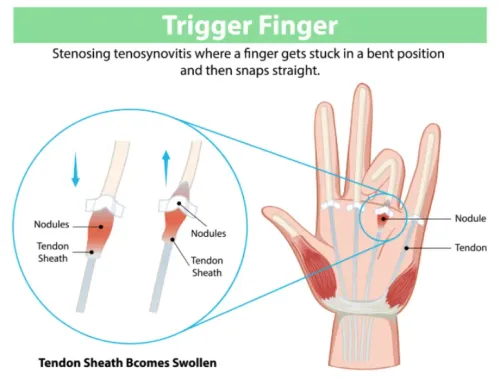
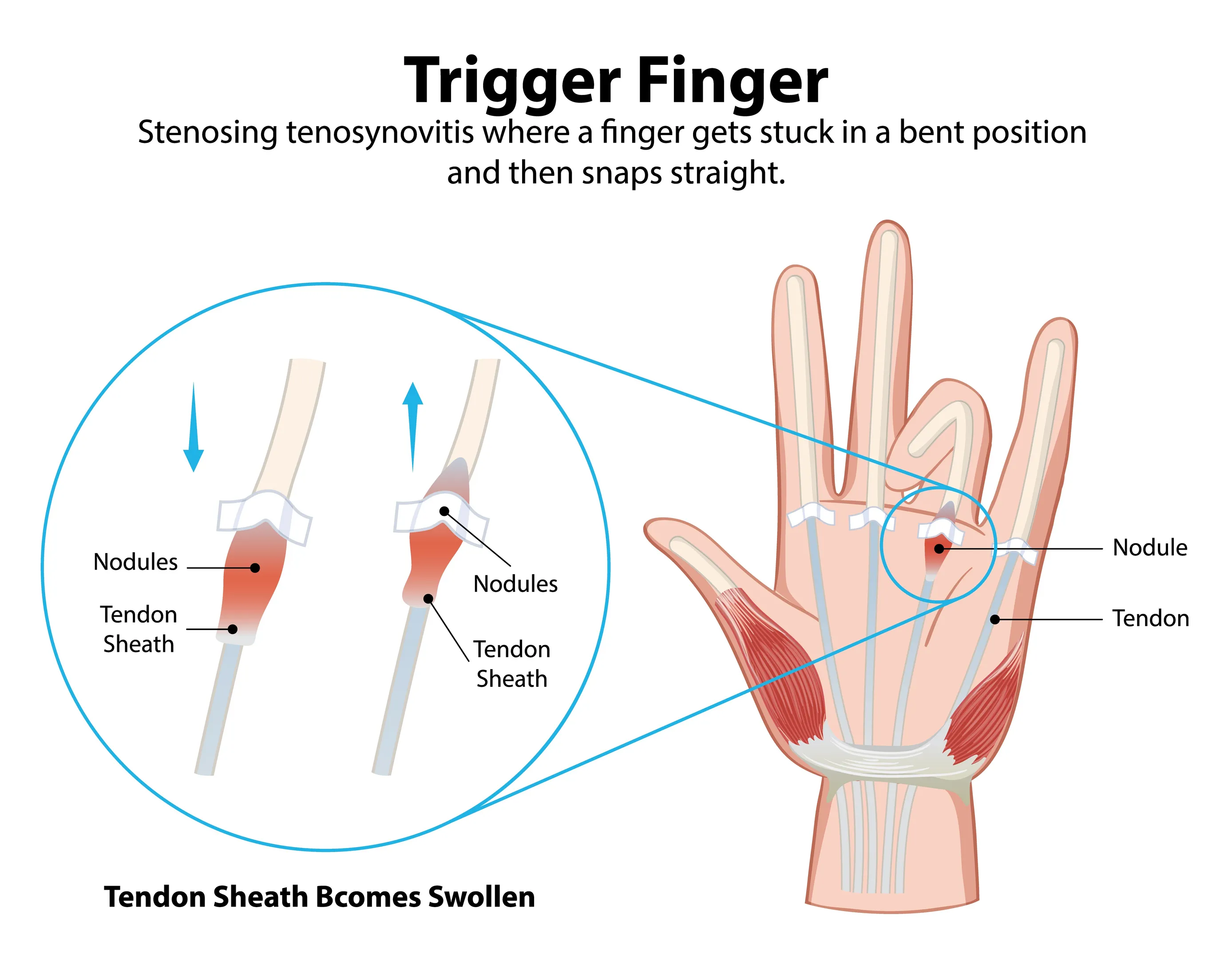
Trigger Finger develops when inflammation narrows the space through which a tendon moves inside its protective sheath. Instead of gliding smoothly, the tendon catches during movement, causing the finger to lock or snap.
The condition most commonly affects the thumb, middle finger, or ring finger, although any finger can be involved. Symptoms usually begin gradually and may initially appear only during the morning.
Common signs include:
- A clicking or popping sensation while moving the finger
- Pain near the base of the affected finger
- Finger stiffness after waking up
- Locking during bending or straightening
- Tenderness in the palm
- Difficulty gripping objects
- Finger becoming stuck in a bent position in advanced cases
Several factors may increase the likelihood of developing Trigger Finger, including repetitive gripping activities, diabetes, rheumatoid arthritis, previous hand injuries, and occupations involving frequent use of hand tools.
Diagnosis is generally based on clinical examination. Unlike fractures or arthritis, Trigger Finger can often be identified through the characteristic locking movement and tenderness over the affected tendon.
Treatment depends on the severity of symptoms. Mild cases may improve with:
- Activity modification
- Temporary splinting
- Gentle stretching exercises
- Anti-inflammatory medication when appropriate
When symptoms persist or locking becomes frequent, additional treatment options may include corticosteroid injections or a minor surgical procedure to release the tightened tendon sheath. Surgery is generally considered when conservative treatment does not provide adequate relief.
Following treatment, hand exercises and rehabilitation may be recommended to restore smooth finger movement and improve grip strength.
Residents of Worli who spend long hours typing, cooking, driving, sewing, or performing repetitive manual work may overlook early symptoms until finger movement becomes significantly restricted. Seeking medical advice before the condition progresses can often simplify treatment and improve outcomes.
Dr Nikita Shetty Orthopaedic Surgeon assesses Trigger Finger by carefully evaluating tendon function, finger mobility, and the severity of symptoms before recommending an individualized treatment plan. The approach focuses on restoring comfortable movement while helping patients return to their regular activities.
A finger that repeatedly locks or clicks should not be ignored as a temporary inconvenience. Early diagnosis allows more treatment options and may reduce the chances of prolonged stiffness or loss of hand function.
Keywords